


If you are a parent or caregiver, chances are you have encountered diaper rash. It starts by peeling back the diaper to reveal a flaming red bum. You then discover the skin is VERY sore to the touch as you try to clean everything up. More formally known as incontinence-associated dermatitis (IAD), this inflamed skin can make even the kindest person grumpy.
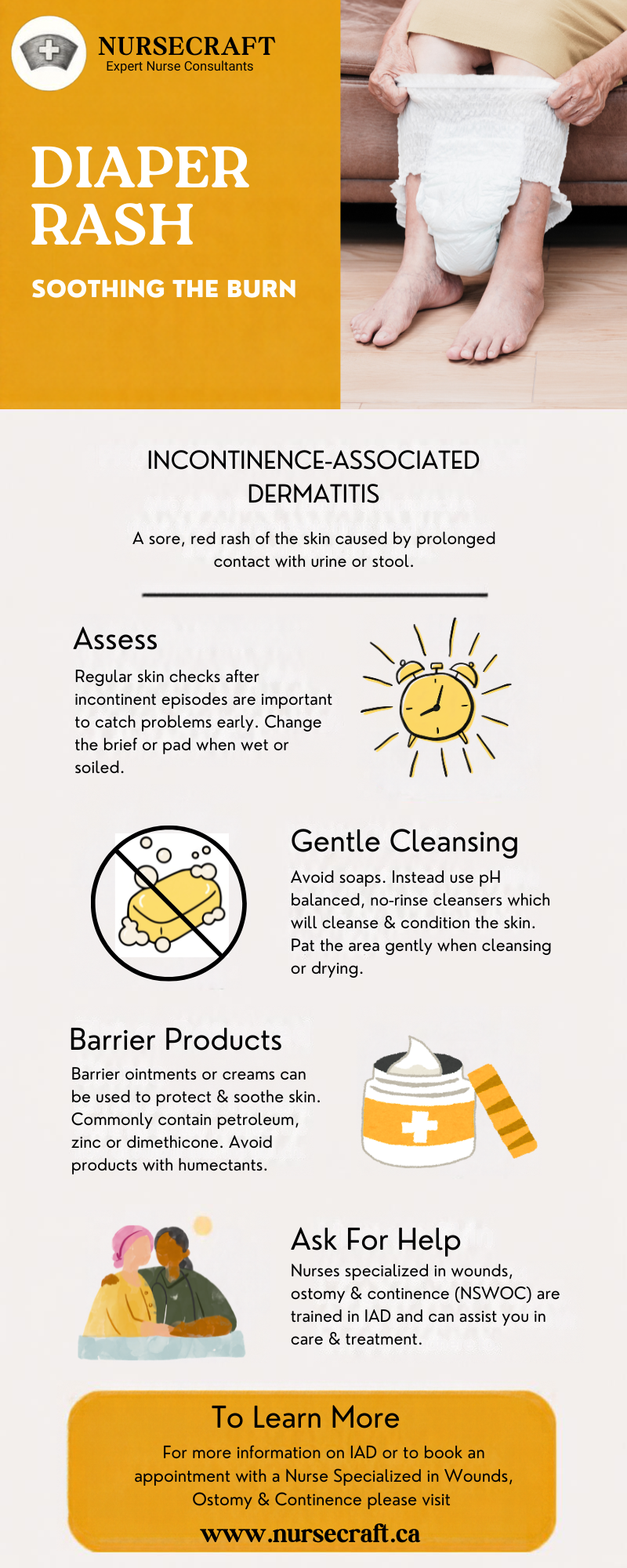
The good news is IAD is very treatable. Most cases are caught early and cared for at home. Where people can get lost is figuring out why the rash is happening and what products to use. Below is a very general overview, to help point you in the right direction. Management usually involves three steps; Assess, Cleanse & Treat. If you would like additional help and support, a Nurse Specialized in Wounds, Ostomy & Continence (NSWOC) can assist with care, management & product selection.
What causes IAD?
Prolonged contact with urine and stool. Urine alters the skin’s natural protective acid mantle while feces contain enzymes which can be corrosive, especially in liquid feces.
Symptoms
Presents as red, sore patches. Often described as a “burning pain.” In extreme cases the skin can breakdown causing erosions which weep serous fluid (shallow wound). Typically located wherever the moisture was in contact such as the groin, buttocks and backs of thighs.
Assess
Train yourself or others within the care team to recognize IAD and complete regular skin checks after episodes of incontinence. Understanding the cause is important for management & prevention. For example, you may notice IAD only occurs during episodes of diarrhea or that certain types of products used are not effective in preventing IAD.
Gentle Cleanse
Using a gentle touch & the proper cleansers are key. Only pH-balanced cleansers should be used, avoid soaps or alkaline products as they strip the skin. Medical supply stores will often sell cleansers designed for IAD with added features such as no-rinse and nourishing skin conditioners. Only pat the effected area (do not rub) and only use soft clothes to area (preferably single use).
Manage the Moisture
If possible, a toileting schedule can be implemented. Containment products like diapers & pads should be absorbent, breathable and properly fitted. It is important to check them on a regular basis and change when soiled.
Treat-Minor IAD
There are many different barrier creams and sprays on the market. The most used and typically more affordable are ointments with petroleum, zinc oxide or dimethicone. Liquid film-forming acrylate sprays or wipes can be used for occasional incontinence.
Treat-Moderate IAD
For more severe cases of IAD, a thick cream with 25-40% zinc can be soothing and effective. These are typically marketed as “maximum strength diaper creams.” It is recommended you speak with a pharmacist or an Incontinence Nurse to select the appropriate product and how to use.
Treat-Severe IAD
It’s time to bring in some help. Your doctor or Nurse Continence Advisor should assess for different containment options, nutrition, medications and environmental factors. A physiotherapist may conduct a pelvic floor assessment. In extreme cases a fecal or urinary diversion could be considered.
